If AI does the boring work, what is a job for?
The Purpose of Work in an AI-Driven World
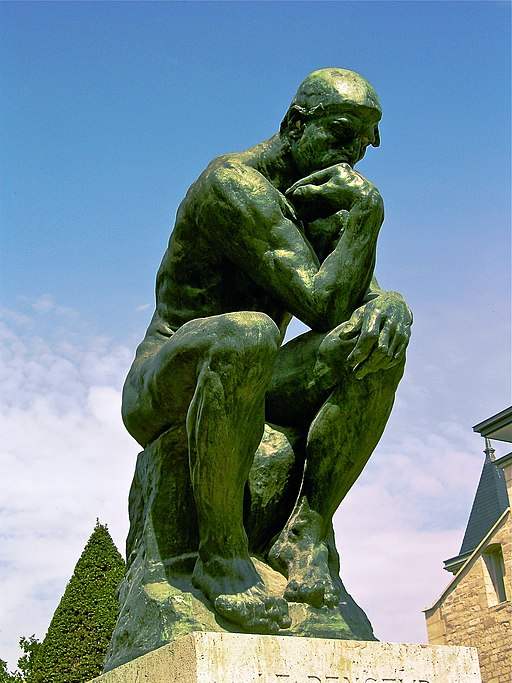 The Thinker at the Musée Rodin, CC BY-SA 3.0, via Wikimedia Commons
I have always been a lover of automation—letting AI and bots do the boring stuff so we can focus on what matters. But as this becomes reality, it raises a deeper question: what is the purpose of a job in this new era?
The Impact of Automation on the Workforce
Consider this scenario: If one team can maintain the same platform with half the people because automation is better, what happens to the other half?
The real problem here isn't just technology; it's how we share resources, how you get food to your table, and how you keep your family warm and safe. Our current system uses money to distribute "stuff", and it uses jobs to distribute money.
New Paradigms: Beyond Traditional Employment
If AI and bots are doing the boring stuff, why do we still cling to the 40-hour work week? The traditional model—where you trade your time for money and money for survival—is predicated on the scarcity of labour and goods. But AI has the potential to move us toward a world of radical abundance.
What if jobs were done for fun, because the "toil" has been automated? In this scenario, we get paid regardless of our output. This leads us to the radical idea: cutting the link between money and jobs.
The Decoupling of Survival and Labor
For centuries, survival has been tied to employment. If you don't work, you don't eat. But when AI can produce food, build housing, and manage energy grids with minimal human intervention, the cost of survival drops toward zero.
Decoupling survival from labour allows humans to pursue "work" that isn't economically productive but is socially or personally valuable—art, caregiving, community building, and scientific exploration.
The Redundancy of Money in a Post-Scarcity World
Money is essentially a tool for rationing scarce resources. In a future where AI-driven automation eliminates that scarcity, money itself begins to look like a legacy technology.
If a robot can manufacture a product at a marginal cost of near-zero, what is the "price" of that product? When energy becomes abundant and manufacturing is localised, the friction of currency may actually hinder the distribution of goods rather than facilitate it. We might move from a transaction-based economy to a resource-based one, where "stuff" is distributed based on a need and availability rather than the ability to pay.
Conclusion: Optimising for Humanity
As organisations optimise for efficiency, we have to ask what we are optimising for as humans. Is it work, or is it purpose?
The journey toward a post-money, post-job society isn't just a technical challenge; it's a psychological and philosophical one. We have to redefine what it means to be a "productive" member of society when productivity is no longer measured by a paycheck.
What does that journey look like? It looks like prioritising human connection, creativity, and well-being over the pursuit of capital. It means building systems that serve the people rather than forcing people to serve the system.
If you found this useful, subscribe to updates and look out for my YouTube channel content.